



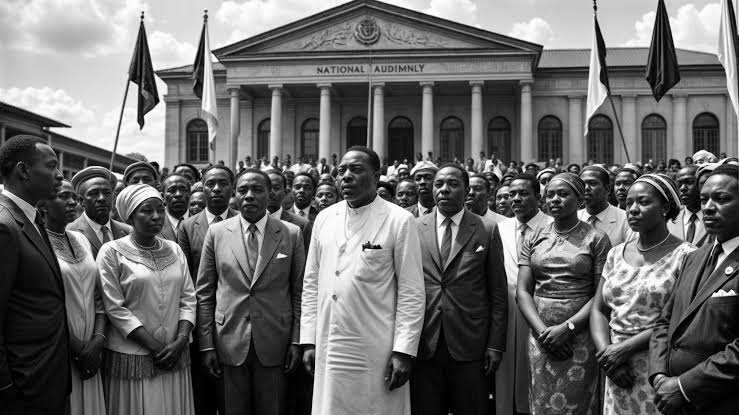
Sixty-eight years ago on September 28, 1958, voters in French Guinea overwhelmingly rejected the draft Constitution of France’s Fifth Republic, becoming the sole French-administered territory in Africa to cast a negative vote and decline membership in General Charles de Gaulle’s proposed French Community.
The historic referendum aimed to restructure relations between Paris and its overseas territories by binding them within a shared institutional framework. In Guinea, the Democratic Party of Guinea (PDG), led by Governing Council President Ahmed Sékou Touré, spearheaded the “No” campaign, advocating for immediate national sovereignty over continued political association. Archives from the French Institute of International Affairs indicate that 1,136,324 Guineans voted against the draft Constitution compared to 56,981 in favor, out of more than 1.4 million registered voters.
The decisive landslide triggered an immediate rupture in institutional ties, prompting the French government to announce the phased withdrawal of its administrative personnel and the termination of state financial assistance. On September 29, French representatives in Conakry acknowledged the political reality of the vote, clearing the path for transition. Days later, on October 2, 1958, Guinea’s Territorial Assembly convened in extraordinary session, transformed into a Constituent National Assembly, and officially declared the independent Republic of Guinea, naming Ahmed Sékou Touré as its first president.
Sf/lb/abj/APA