



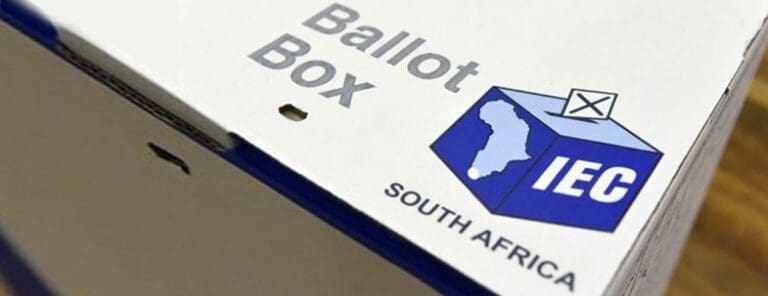
The Electoral Commission of South Africa (IEC) has signed a partnership agreement with Google, Meta, Microsoft, TikTok and civil society organisation Moxii Africa to strengthen efforts against election-related disinformation ahead of next month’s local government elections.
The agreement forms part of the electoral body’s broader strategy to safeguard the integrity of election information amid growing concerns over the impact of misinformation, disinformation and AI-generated content on democratic processes worldwide.
The partnership renews a framework first adopted during South Africa’s 2024 national and provincial elections and is designed to facilitate rapid cooperation between the IEC and major online platforms when false or misleading election content emerges.
IEC Chief Electoral Officer Sy Mamabolo said the arrangement would provide the commission with direct access to digital platforms, enabling faster responses to harmful content that could undermine voter confidence.
“Our partnership with digital platforms is critical to ensuring that voters have access to credible, accurate and trustworthy information to make informed political choices,” Mamabolo said.
“A technically flawless election can still lose public trust if citizens are overwhelmed by disinformation.”
The rise of social media has transformed election campaigning and voter engagement, but it has also created new avenues for the spread of manipulated, misleading and false information.
Electoral authorities across the world have increasingly turned their attention to coordinated online campaigns, deepfakes and other forms of digital deception capable of influencing public perceptions during election periods.
South Africa has not been immune to the challenge, particularly during recent election cycles when false claims, doctored images and misleading social media posts circulated online.
The IEC has repeatedly warned that such content has the potential to erode public trust in electoral processes and democratic institutions.
To strengthen its response, the commission in September gazetted the Electoral Code of Conduct Countering Disinformation in the Local Government Elections.
The code applies to political parties, candidates and their representatives and forms part of the broader Electoral Code of Conduct, carrying equivalent sanctions for violations.
Under the new partnership, the IEC and participating technology companies will cooperate throughout the election period, support voter awareness campaigns, provide training on disinformation, and collaborate on initiatives aimed at limiting the spread and impact of false election content.
The framework also allows participating platforms to continue enforcing their own policies, including content removal, warning labels and other interventions where appropriate.
The commission has additionally designated the Real411 platform as its primary mechanism for receiving and assessing reports of alleged election-related disinformation.
Members of the public can submit complaints through the platform’s website or mobile application, with reports accepted in all 11 official languages.
Real411 independently assesses complaints and may recommend various responses, including referrals to the IEC, online platforms or, in serious cases, the Electoral Court.
The commission may also issue public statements to correct false information.
The technology companies and civil society partners involved in the initiative said they would continue using existing tools and policies to support election integrity efforts.
JN/APA