



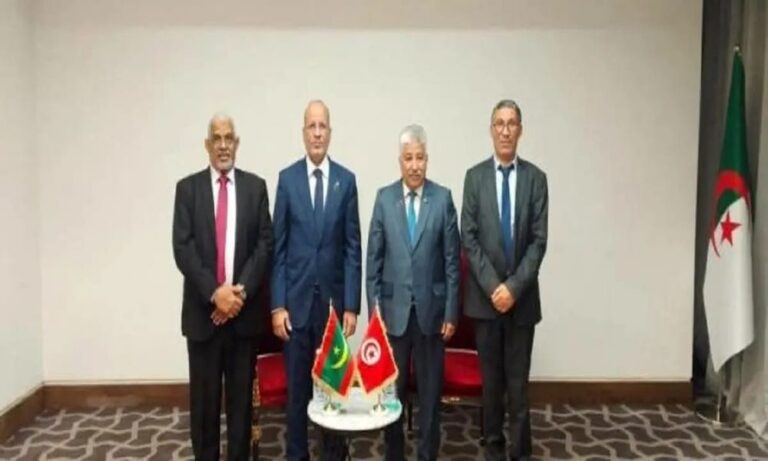
Tunis and Nouakchott aim to deepen their cooperation in vocational training and professional qualification, with a focus on transferring Tunisian expertise and developing skills in Mauritania.
On Tuesday, Tunisia’s Minister of Employment and Vocational Training, Riadh Chaoued, met with his Mauritanian counterpart – responsible for Vocational Training, Crafts, and Trades – Mohamed Maalainine Ould Eyih, on the sidelines of the African Skills Policy Forum held in Oran, Algeria.
According to a statement released by the Tunisian ministry on Wednesday, the working meeting cantered on prospects for strengthening the bilateral partnership.
Talks focused, in particular, on ways to expand cooperation in the fields of vocational training and professional qualification. The two officials also explored opportunities for Mauritania to leverage
Tunisian experience to improve its training systems and enhance the skills of its human resources.
Riadh Chaoued highlighted the long-standing relationship between the two nations in the sectors of vocational training and employment. He reaffirmed his ministry’s readiness to deepen this cooperation and make Tunisian expertise available to the Mauritanian authorities, especially in supporting their skills development policies.
Mohamed Maalainine Ould Eyih praised Tunisia’s experience in initial and continuing education, the training of trainers, and the development of professional qualifications.
He also underscored the high regard in which Tunisian professionals – including trainers, coaches, training and employment advisors, and self-employed experts – are held in Mauritania.
At the conclusion of the meeting, the two ministers agreed to reactivate existing agreements and memoranda of understanding between their countries, following a process of evaluation and updating.
This initiative aims to adapt existing commitments to current needs and translate them into operational terms.
This cooperation takes place against a backdrop where workforce qualifications and the alignment between training and the labour market represent significant challenges for African economies.
For Nouakchott, closer ties with Tunis offer an opportunity to leverage regional expertise in developing its training systems, while Tunisia seeks to consolidate its presence in the exchange of skills and know-how across Africa.
MK/AK/Sf/fss/as/APA