



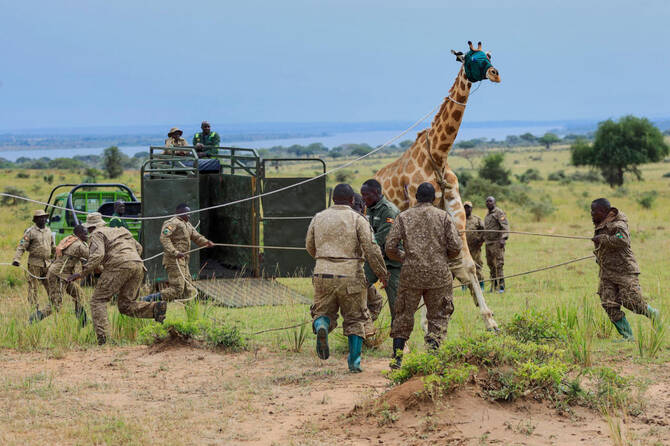
The Uganda Wildlife Authority (UWA) has begun translocation of endangered Nubian giraffes from Murchison Falls National Park to Ajai Wildlife Reserve, aiming to restore the species to its historic range, protect them from local industrial pressures like oil drilling, and boost local tourism, APA can report on Friday.
The project, expected to last a couple of days, is intended to preserve the species´ population, enhance biodiversity and diversify tourism opportunities.
An estimated 40 percent of Uganda´s oil deposits are in the Murchison Falls area and within the park. In recent months, there has been increased oil drilling activities including heavy machinery movement through the national park despite years of opposition from environmentalists.
Patrick Atimnedi, the Uganda Wildlife Authority assistant commissioner for veterinary services who leads ongoing giraffe translocation, said establishing new animal populations in other protected areas will reduce pressure on the current habitat if there is significant damage from drilling.
Uganda wants to expand the range of the critically endangered giraffes because of oil and gas activities, tourism development, climate change, bush encroachment and invasive species, he said.
“This is shrinking the habitat of wildlife here, but especially giraffes,” Atimnedi said of the animals that can grow up to 6 meters (20 feet) tall and weigh up to 2,000 kilograms (4,400 pounds).
“So having a seed population somewhere about 100 kilometers (62 miles) away from here within the same conservation area, the same zone, is the right conservation decision to make,” he said.
So far 12 endangered Nubian giraffes have been translocated from Murchison Falls National Park to Ajai Wildlife Reserve
The introduction of the Nubian giraffes to the reserve is part of an ongoing ecological restoration effort. In addition to the giraffes, other wild animals such as southern white rhinos, buffalo, zebras and hundreds of Uganda kobs are being reintroduced.
Wildlife authorities are optimistic that Ajai, established in 1937, will serve as a new home for their work to increase Uganda’s wild animal population despite pressures from human activity and nature that threaten their conservation.
MG/abj/APA