





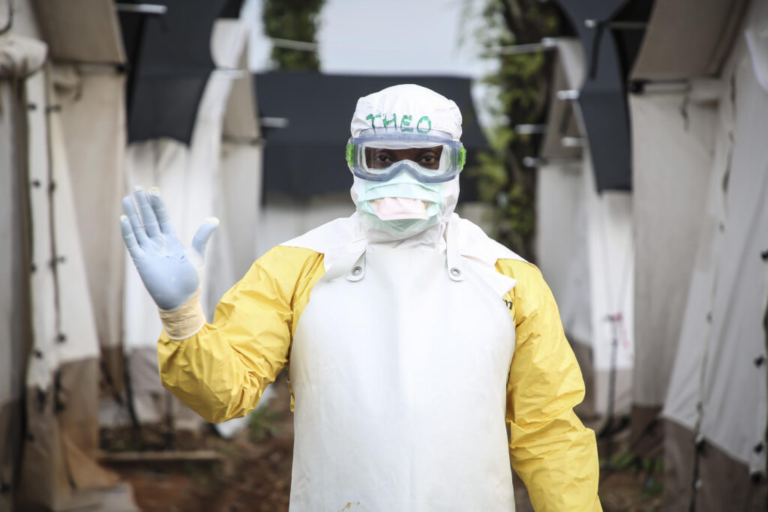
The World Health Organization (WHO) has raised urgent concerns over undetected transmission pathways in the Democratic Republic of Congo as the nation’s Ebola outbreak surpasses 6,000 confirmed cases and 3,000 deaths.
Speaking on the escalating public health crisis, WHO Director-General Tedros Adhanom Ghebreyesus warned that unidentified chains of infection continue to propagate the virus, driven by a high proportion of community-level deaths among individuals who were never previously flagged as contacts. The epidemic has now expanded across 60 health zones in six provinces, prompting the Congolese government to outline a comprehensive six-month emergency plan that requires an estimated $1.3 billion in international funding to halt viral spread and prevent further loss of life.
The compounding health crisis unfolds alongside critical efforts to maintain educational continuity for nearly two million children in the affected provinces, where schools officially reopened on Tuesday amid ongoing armed conflict and widespread population displacement. Prior to the outbreak, persistent insecurity had already forced the closure of over 1,100 schools, leaving roughly 490,000 students without access to classroom instruction. To mitigate transmission risks in academic settings, United Nations agencies are deploying hygiene infrastructure and rolling out targeted infection control protocols, including a train-the-trainer initiative designed to equip more than 18,000 teachers and school personnel with essential disease prevention measures.
Despite these frontline interventions, severe operational deficits continue to undermine both health and educational response efforts across eastern Congo. Approximately two-thirds of schools within the outbreak zones still lack basic water, sanitation, and hygiene facilities, while the education sector remains the most severely underfunded segment of the broader humanitarian response appeal, securing less than a quarter of necessary resources. Humanitarian organizations emphasize that securing immediate capital to bridge these funding gaps remains vital not only to containing the epidemic, but also to protecting vulnerable children from permanent school dropout and associated protection risks during a multi-layered crisis.
TE/Sf/lb/abj/APA