





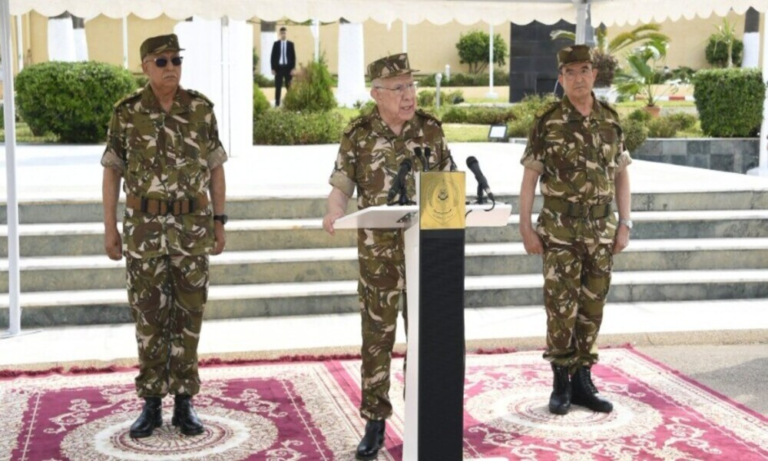
The Algerian Chief of Staff, Army General Saïd Chanegriha, has called for the continuous modernization of military training in response to evolving geopolitical and technological shifts, in a regional context marked by multiple centers of instability.
Speaking before senior officers and commanders at the Higher School of War, the head of the Algerian People’s National Army (ANP) stressed the critical need to adapt military education programs to the rapid transformations currently shaping the international strategic environment. According to statements reported by Algerian state media, the senior military official underscored the role of the institution in preparing officers capable of addressing increasingly complex security challenges, describing the Higher School of War as a center of excellence capable of producing analysis and proposals to support the overall evolution of Algeria’s military doctrine.
His remarks come as Algerian authorities have, in recent years, repeatedly called for heightened vigilance in the face of persistent regional instability, pointing particularly to the ongoing crises in the Sahel, Libya, and other parts of the continent. Military officials have regularly emphasized the necessity of strengthening the operational and technological capabilities of the armed forces to adequately respond to these evolving threats. Furthermore, the Chief of Staff’s message highlights growing concerns over the military’s adaptation to fundamental changes in the nature of warfare, including the integration of new technologies, advanced weapons systems, and strategic lessons drawn from recent conflicts. While state authorities point to steady progress in this area, limited detailed information has been made public regarding the concrete outcomes of the modernization strategy.
Beyond the strictly military dimension, the statement reflects ongoing efforts by authorities to maintain a mobilizing discourse centered on sovereignty and national security. This rhetoric, frequently utilized by Algerian institutions, comes amid sustained regional tensions as well as domestic economic challenges. For several observers, the emphasis on the continuous adaptation of the armed forces reflects both the rapid evolution of external threats and the broader difficulty facing regional states in anticipating current geopolitical shifts. Despite maintaining significant defense budgets and sustained modernization efforts, the ability of Maghreb armies to keep pace with technological and strategic change remains a formidable, long-term challenge.
MK/AK/Sf/lb/abj/APA