





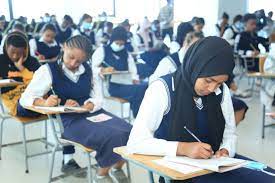
Out of the 550,210 students who sat for the 2026 grade 12 Ethiopian national leaving examination, 70,544 students passed the exam, scoring 50 percent or above.
The pass rate rose to 12.8 percent this year, extending a gradual recovery from several years of exceptionally low results, although close to 480,000 students still failed to reach the minimum 50 percent score.
“70,544 of the 550,210 students who sat for the 2026 national leaving examination scored 50 percent or above,” said Birhanu Nega, Ethiopia’s minister of education, in a briefing over the weekend, noting that 479,666 candidates of those who took the examination, earned below the passing result.
He said despite the small number of students who passed the exam, this year’s result represents a notable improvement from last year, when only 8.9 percent of candidates achieved a passing score. The number of successful candidates has increased by more than 20,000.
The improvement adds to a gradual recovery in national examination performance following the exceptionally low pass rates recorded after Ethiopia tightened the administration of the Grade 12 examination and strengthened measures against cheating and examination leaks.
Since 2022, the government has shifted the national examination to public university campuses as part of an effort to restore credibility to the testing system. The change was followed by a dramatic decline in pass rates, exposing longstanding concerns about the quality of secondary education, student preparedness and disparities between schools.
Since then, results have shown gradual improvement, although the overwhelming majority of students continue to score below the national benchmark.
This year’s performance also revealed a significant gap between Natural Science and Social Science students.
According to Nega, 16.58 percent of Natural Science candidates scored 50 percent or above, compared with just 8.33 percent of Social Science students.
The highest score in Natural Sciences was 591.64 out of 600 for a male student, equivalent to nearly 98.6 percent. The highest score among female Natural Science candidates was 583.03.
In Social Sciences, the highest male score was 576.25 out of 600, while the highest-performing female student scored 569.17.
School-level results also showed both improvement and deep disparities across the education system.
Eighty-eight schools recorded a 100 percent pass rate this year. At the opposite end, 565 schools failed to produce a single student who scored 50 percent or above. The number of zero-pass schools, however, has fallen sharply from 1,232 last year.
That decline represents one of the clearest improvements in this year’s examination results. Yet the fact that 565 schools still failed to produce even one passing student underscores the scale of the challenge facing the education system.
Such disparities raise broader questions about differences in teaching quality, school infrastructure, access to learning materials, student preparation and the capacity of schools across regions.
MG/as/APA