



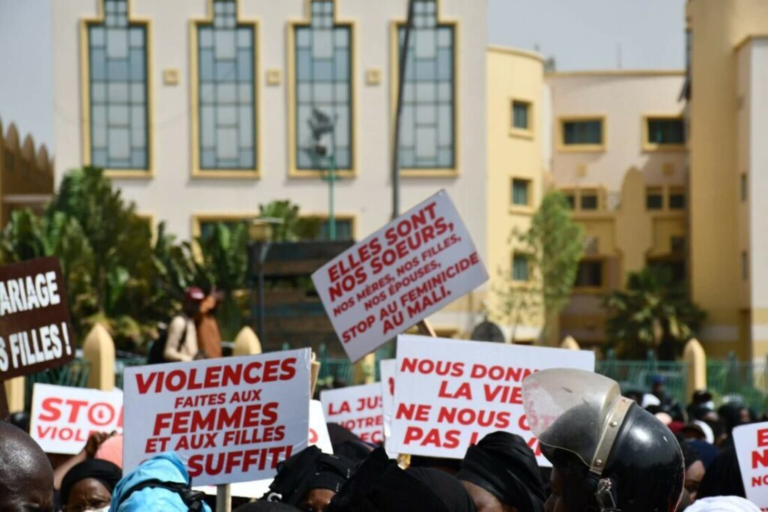
Malian authorities documented 9,664 cases of gender-based violence (GBV) across the country in 2025, with women and girls accounting for more than four-fifths of all recorded victims, according to official figures released Monday, November 23, 2026, in Bamako.
Presented by the National Program for the Abandonment of Gender-Based Violence (PNVBG) during a press briefing held under the Ministry for the Promotion of Women, Children and the Family, the report indicates that 7,793 women (80.64%) and 1,871 men (19.36%) were affected over the course of the year.
A breakdown of the data reveals that psychological and emotional abuse represented the most prevalent form of violence at 29.4% of reported incidents, closely followed by physical assault at 22.4% and the denial of resources at 22.1%. Sexual assault accounted for 8.2% of the caseload, while rape and child or forced marriage comprised 7.9% and 6.9%, respectively. Alongside tracking incidents, PNVBG Director Youssouf Bagayoko highlighted the state’s response efforts, noting that 12,414 support and care services were delivered to survivors in 2025, while 15,573 prevention and sensitization sessions reached more than 1.83 million people nationwide. Officials emphasized that the statistics reflect cases captured by the national monitoring framework rather than an exhaustive tally of all abuses committed across the country.
The findings were unveiled ahead of the 2026 edition of the international “16 Days of Activism” campaign against violence targeting women and girls, which runs from November 25 to December 10. Officially launching in Bamako on Wednesday, November 25, under the national theme “Ending Domestic Violence, a Duty of Families and Community Leaders to Ensure Family Well-Being,” the mobilization will feature panel debates, specialized training for religious and community leaders, radio broadcasts, and grassroots outreach across multiple regions. According to Bagayoko, the drive seeks to reinforce domestic violence prevention, streamline referral pathways so survivors can access appropriate care, and mobilize families and local leaders as active partners in curbing abuse.
MD/te/Sf/lb/abj/APA