



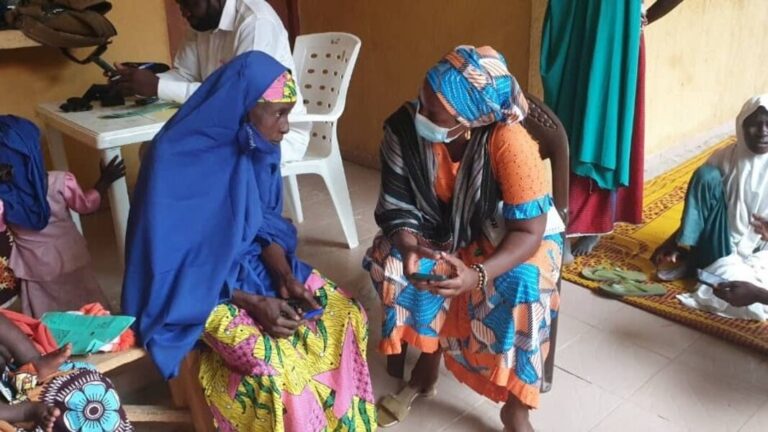
A swift and coordinated response by Mauritania’s Ministry of Health, supported by the World Health Organization (WHO) and humanitarian partners, has successfully contained a diphtheria outbreak at the Mberra refugee camp.
The prompt action, including a mass vaccination campaign and the deployment of emergency supplies and experts, prevented a wider crisis in the densely populated setting.
In the early months of 2024, health workers at the camp began seeing children with symptoms of diphtheria. Within days, the tell-tale signs of the illness confirmed an outbreak. Given the limited health infrastructure of the camp, an immediate and robust response was critical. Within 72 hours of lab confirmation, a full-scale operation was launched.
Between July and September 2024, ten cases of diphtheria, including two deaths, were reported in the camp. Eight of these cases were in children, with six being under the age of five and all of them unvaccinated.
Coordinated action saves lives
In response, over a thousand people were vaccinated, including nearly 70 health professionals. More than two tonnes of emergency supplies, including antitoxins, antibiotics, and personal protective equipment, were delivered to the camp. The WHO also deployed technical experts to assist with case investigations, contact tracing, and coordination with local teams. Community health workers were quickly trained to identify symptoms, isolate cases, and provide prevention education to families.
“Before the training, many of us had never seen a case of diphtheria,” said Fatou, a community health volunteer. “Now we know what to look for, and how to respond.”
A targeted risk communication campaign, using megaphones, posters, and local radio in multiple languages, was launched to build trust and encourage early reporting of symptoms.
Thanks to this rapid, coordinated approach, the outbreak was contained within a few weeks, with no new deaths reported. All cases remained confined to the initial cluster. “This was a textbook example of what rapid mobilization and partnership can achieve,” said Dr. Charlotte Faty Ndiaye, WHO Representative in Mauritania. “In a fragile setting like Mberra, early action saved lives.”
The experience has underlined the importance of preparedness, coordination, and community engagement in humanitarian contexts. Between July 2024 and May 2025, more than 2,300 newly arrived individuals at the camp were vaccinated, with a particular focus on diphtheria prevention.
ABJ/APA