





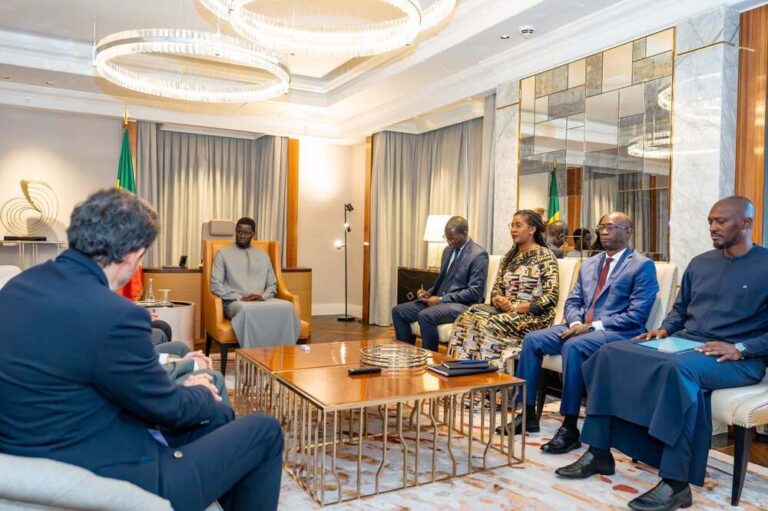
The search for new economic partnerships and the strengthening of cooperation in the energy sector are the main focus of Senegalese President Bassirou Diomaye Faye’s official visit to Germany.
Through a series of meetings with German business leaders visiting Berlin, President Faye is actively seeking to attract investments that can support Senegal’s structural economic transformation. Following a meeting with Siemens Healthineers executives to discuss cooperation prospects in the healthcare sector, President Faye met with Michael Fischer, CEO of GAUFF Engineering, a German group with a long-standing presence in Senegal in the energy and infrastructure sectors.
Discussions during the visit centered heavily on expanding the rural electrification program and developing sustainable energy solutions. The Senegalese president highlighted the positive results achieved through projects led by the Senegalese Rural Electrification Agency (ASER), which have enabled many communities far from the national grid to access electricity through solar power. Beyond basic access to electricity, Dakar now aims to leverage solar energy as a direct driver of economic development. Conversations focused on its strategic use in agriculture, particularly for irrigation, preservation, and the processing of agricultural products, in order to boost productivity and create sustainable value in rural areas.
Infrastructure also emerged as a key topic of discussion. Faced with the recurring floods that affect several regions of the country during the rainy season, President Faye stressed the urgent need to accelerate the construction of modern sanitation, drainage, and stormwater and wastewater management systems. For the Senegalese authorities, these combined investments in energy and infrastructure are essential levers for competitiveness and economic attractiveness, as improving basic services is considered a strict prerequisite for industrialization, agricultural modernization, and job creation. This visit to Germany forms part of Senegal’s broader economic diplomacy strategy, which aims to attract more foreign capital, technology, and expertise to Berlin, making it clear that energy, infrastructure, and productive investment must serve as the primary engines of sustainable and inclusive growth.
TE/Sf/fss/abj/APA