





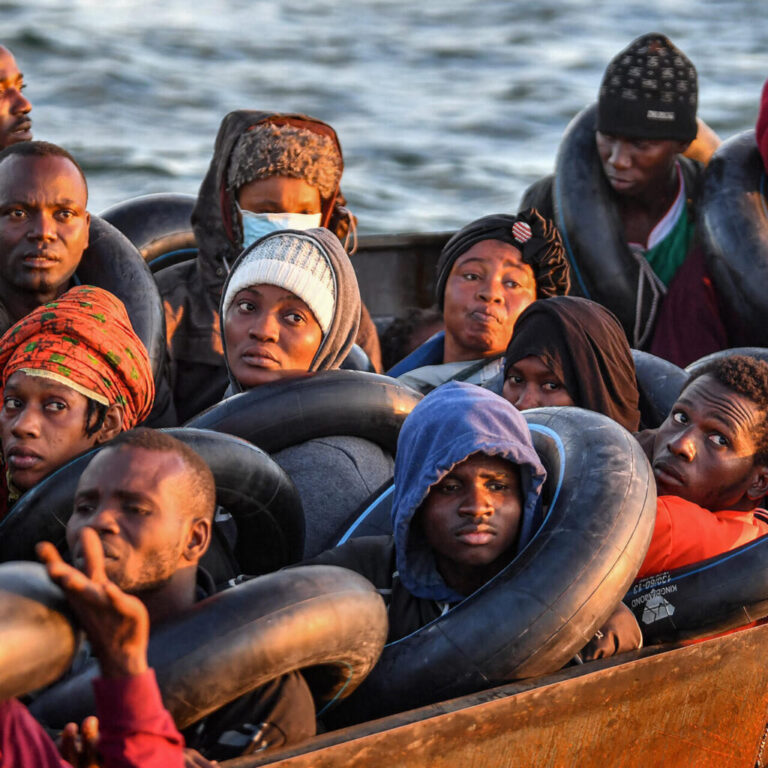
Tunisia is facing increasing international pressure over its treatment of sub-Saharan migrants.
New legal and political initiatives are being launched with the goal of holding President Kais Saied, security officials, and nationalist parties accountable for alleged human rights violations.
Kamel Jendoubi, a former Tunisian minister and opposition figure, is leading a coalition of associations and NGOs to document abuses against migrants. He is building a case to submit to the International Criminal Court (ICC), arguing that the country’s actions violate the Rome Statute, which Tunisia has signed.
In a separate but related effort, Tunisian lawyer Brahim Belghith is preparing his own appeal to the ICC. He is also looking into a possible referral to the International Court of Justice (ICJ), a move that would require the support of another country. Belghith is also assisting an Italian association that plans to bring a case to the African Court on Human and Peoples’ Rights (ACHPR) on behalf of an asylum seeker who claims to have been a victim of violence in Tunisia.
Belghith is also involved in other high-profile cases, including that of Tunisian lawyer Sonia Dahmani, who was convicted in 2024 for criticizing the country’s migration policy and is also preparing to take her case to the ACHPR.
These legal challenges come after Tunis announced in March 2025 that it would no longer recognize the jurisdiction of the African court, a decision that Belghith intends to challenge.
International pressure has grown since 2023, when organizations like Amnesty International began reporting on the pushback of migrants into the deserts on the borders with Libya and Algeria. These actions are widely considered to be violations of international law. The European Union has also been criticized for turning a blind eye to these practices due to its security cooperation with Tunisia, which is aimed at preventing migrants from crossing the Mediterranean.
MK/ac/Sf/fss/abj/APA