





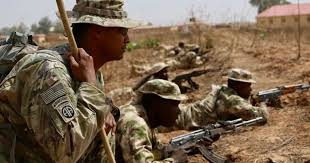
The Nigerian Defence Headquarters says the planned drawdown of more than 200 United States personnel from Nigeria will not affect the enduring security partnership between both countries.
The Director of Defence Information, Maj.-Gen. Samaila Uba, said in Abuja while responding to questions at the Joint Security News Briefing that the withdrawal should not be interpreted as a breakdown or termination of Nigeria’s security cooperation with the United States (US).
“The relationship between Nigeria and the United States remains strong, enduring and mutually beneficial,” he said.
He explained that the deployment of US personnel was tied to specific operational and counter-terrorism objectives, making the drawdown part of the evolving nature of the engagement.
According to him, intelligence cooperation, training, information sharing and other areas of professional military cooperation will continue despite the adjustment in US troop presence.
“The responsibility for the defence of Nigeria and the protection of its citizens rests primarily with Nigerian security forces,” Uba said.
He said that the partnership with the United States was designed to strengthen Nigeria’s capabilities through intelligence sharing, training and technical assistance.
Uba added that where both countries jointly assessed the need for additional efforts, including joint strikes, such operations would be undertaken.
He said that the partnership had continued to produce favourable outcomes against terrorism and other transnational security threats.
The Defence spokesman urged the media and Nigerians not to interpret routine adjustments in foreign military deployments as evidence of a collapse in bilateral security cooperation or Nigeria’s defence capability.
On kinetic and non-kinetic operations, Uba said that the military’s primary responsibility remained kinetic operations against terrorists and other armed groups threatening Nigerians.
“Our major job is kinetic operations. As much as possible, we want to take down all the terrorists in Nigeria, or anybody who takes up arms against citizens,” he said.
He, however, said that the military would continue supporting non-kinetic interventions under the whole-of-society and whole-of-nation approach to tackling insecurity.
Uba stressed that such support would not compromise the military’s position against dialogue with terrorists or the payment of ransom.
He further clarified that some non-kinetic initiatives were state-led, with the military providing support where required.
According to him, the distinction is important because the police remains the lead agency for internal security, while the military provided support to the Nigeria Police Force.
He explained that the Armed Forces remains focused on defeating armed criminal elements, while contributing to broader national efforts aimed at addressing the root causes of insecurity.
GIK/APA