



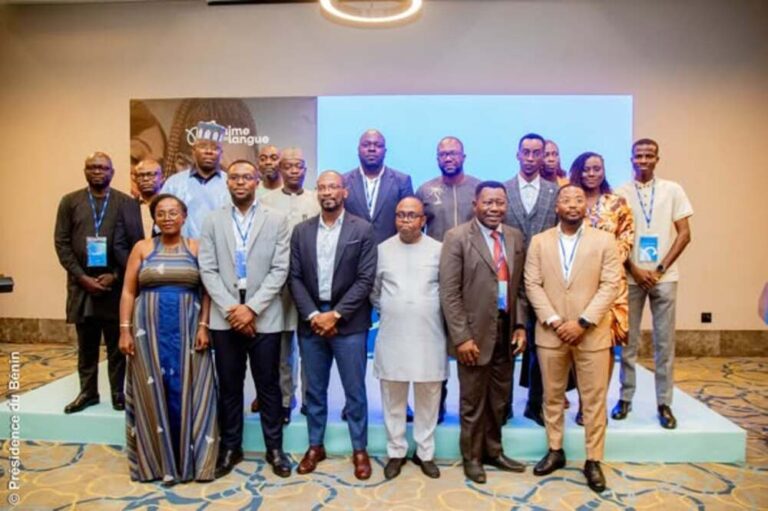
Benin has officially launched the “JaimeMaLangue” (LoveMyLanguage) project in Cotonou.
This pioneering initiative, a joint effort between the Information Systems and Digital Technology Agency (ASIN) and the IIDiA Institute, aims to integrate artificial intelligence (AI) into the digital world to promote and preserve local languages.
Operating under the theme “Benin Speaks to the Future,” the ambitious program seeks to equip the country with a national AI capability that can understand and interpret Beninese languages, starting with Fongbe. The core objective is to make digital technologies more accessible, inclusive, and deeply rooted in the nation’s cultural heritage.
The project employs a collaborative and participatory approach, inviting citizens to become active participants in shaping Benin’s digital future: Registration: Citizens register on the jaimemalangue.bj platform. Language Selection: They choose their specific local language. Voice Recording: Participants record various sentences.
This voice data is collected anonymously and will feed into a national database. The data will then be used to train specialized artificial intelligence models, with the entire process overseen by a committee of expert linguists and technicians. The initiators believe this approach merges inclusion, innovation, and the promotion of linguistic heritage.
Since 2016, Benin has established itself as a leader in African digital governance, focusing its policies on technological sovereignty, data protection, and local digital promotion.
The launch of “JaimeMaLangue” reflects the government’s commitment to placing national languages at the center of this technological development. The project complements broader government initiatives, such as the National Digital Transformation Plan (PNTN) and the Universal Digital Access Project, which aim to bridge both the linguistic and technological divides.
By successfully integrating Beninese languages into the digital world, “JaimeMaLangue” represents a decisive step toward creating a truly inclusive and culturally rooted digital ecosystem. Organizers are urging the public to participate widely in the voice collection process to ensure the resulting AI accurately reflects the nation’s rich linguistic diversity.
RNK/te/Sf/fss/abj/APA