



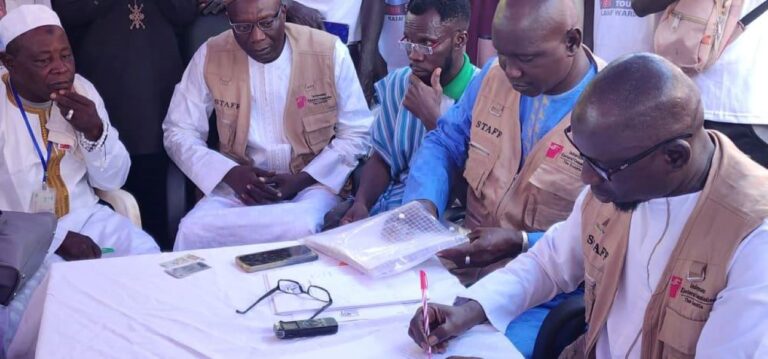
Gambia’s Independent Electoral Commission says it is halfway through the process of receiving nominations from aspirants seeking to run for the presidency on December 5th, 2026.
Speaking shortly after Ebrima Tabora Manneh of the People’s Alliance Party (PAP) the latest aspirant submitted his nomination papers on Sunday morning, IEC chairman Joseph Colley said the commission was well within its schedule to receive submissions from prospective candidates ahead of the polls.
According to him, Alkali Cham has withdrawn his bid for nomination, taking the number of withdrawals to three.
Fielding questions from waiting journalists, PAP’s nominee spoke about doing away with the old order and starting anew. According to him, it was a travesty of history that his country now lags behind Asian economic giant Singapore despite both countries’ striking similarities as poor, resourceless dominions of the British and attaining independence in the same year, 1965. Manneh said if he was elected into presidential office, The Gambia would take its economy, security and future and redirected to a development trajectory unprecedented in its history. He described the country as one of the least developed nations even by African standards and vowed to change that.
27 aspirants had originally been listed for nomination including incumbent President Adama Barrow of the ruling National People’s Party (NPP) and opposition veteran Ousainou Darboe of the United Democratic Party (UDP). Both Barrow and Darboe will submit their nomination papers over the next few days.
Former Kanifing municipality mayor Talib Ahmed Bensouda leading the United Movement for Change (UMC), an offshoot of the UDP Saturday submitted his nomination papers amid jubilant scenes by thousands of his supporters who accompanied him to election house.
Bensouda who had been mayor since 2018, resigned his position to allow him to bid for the presidency in accordance with the dictates of Gambian law. His UMC formed just months before some 1.1 million Gambians head to the polls, is widely regarded as a third political force which can leave its mark in next month’s high-stakes vote.
Gambia’s election year has witnessed a series of behind-the-scenes negotiations and horse-trading among some of the country’s biggest political groups with a view to forming electoral alliances.
The NPP pulled off a propaganda coup over their rivals after Mamma Kandeh’s Gambia Democratic Congress, which came third in the 2021 presidential election, and erudite lawyer Essa Faal threw their weight behind the ruling party.
WN/as/APA