





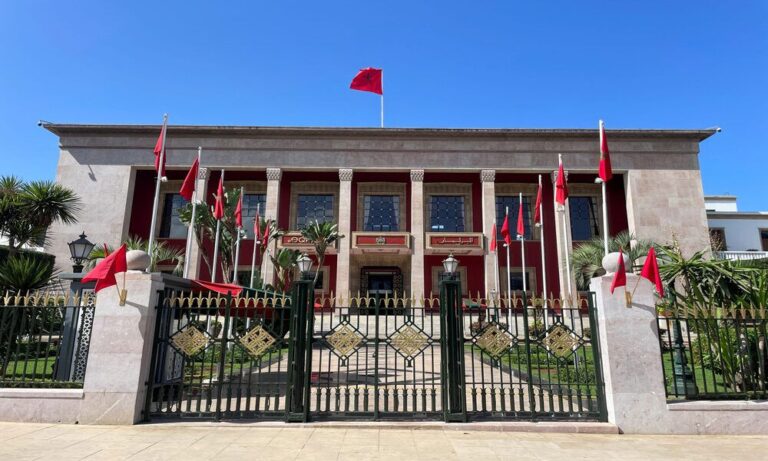
Morocco is gearing up for a major electoral event: the legislative elections scheduled for Wednesday, September 23, 2026.
The future of the political parties hinges on the choices made by the 16 million voters heading to the polls.
This Moroccan legislative vote will determine the standing of each political group and the level of public trust in the parties – particularly the three that made up the outgoing governing coalition
led by Aziz Akhannouch: The National Rally of Independents (RNI), the Authenticity and Modernity Party (PAM), and the Istiqlal Party (PI).
The election will result in the renewal of the 395 members of the House of Representatives – the lower house of parliament – and determine the new parliamentary majority tasked with supporting the next government.
These legislative elections represent a pivotal moment in Morocco’s institutional life, as they will define the political landscape for the coming five years and pave the way for the formation of a new government team.
The future of the current governing coalition, led by Aziz Akhannouch, is at stake in these elections. Contesting parties are seeking to draw young voters to the polls by promising, among other things, jobs and decent housing.
In accordance with constitutional provisions, the party that wins the most votes will be tasked with forming the government.
The king will appoint the future head of government from among the members of the winning party, pursuant to Article 47 of the constitution.
The incoming government must then secure a vote of confidence from the deputies of the House of Representatives after presenting its program for the next five years.
Nearly 16 million Moroccan voters will be called upon to choose their representatives for the House of Representatives. For this election, 1,850 candidate lists were submitted nationwide, totalling 7,288 candidates – an average of more than 18 candidates per seat, according
to data from the interior ministry
A total of 28 political groups participated in the process, including a coalition formed specifically for these elections. Two non-partisan lists were also fielded in two local electoral districts.
In local electoral districts, 1,615 lists comprising 5,505 candidates were submitted, compared to 1,472 lists with 5,046 candidates during the 2021 legislative elections.
In the 12 regional electoral districts – reserved exclusively for women – 235 lists comprising 1,783 female candidates were submitted, averaging 20 candidates per seat.
Female candidates total 2,658, representing 36.47% of all candidates.
This figure includes 1,783 women running in regional electoral districts and 875 in local districts.
Furthermore, 121 of the lists submitted in local electoral districts are headed by women.
Among the incumbent parliamentarians running in this election are 227 members of parliament: 204 male MPs, 20 female MPs, and 3 councillors.
Voters do not vote directly for an individual candidate but rather for a list presented by a political party or coalition.
Seats are then allocated among the various groups based on the results achieved in each district.
Of the 395 seats, 305 are allocated via local electoral districts, while 90 seats are assigned through regional electoral districts.
This latter measure aims in particular to strengthen women’s representation in parliament and to foster greater diversity in the composition of the chamber.
A special revision of the electoral rolls was organized prior to the legislative elections – running from May 15 to June 13 – to allow new voters to register and to enable citizens who had changed addresses to update their information.
This procedure aims to ensure greater reliability of the electoral register and to facilitate citizen
participation. Voting takes place under the principle of the secret ballot, followed by a vote count conducted in accordance with legally prescribed procedures.
The main political forces represented in the outgoing parliament include the National Rally of Independents (RNI), the Authenticity and Modernity Party (PAM), the Istiqlal Party (PI), the Socialist Union of Popular Forces (USFP), the Popular Movement (MP), the Party of Progress and Socialism (PPS), and the Justice and Development Party (PJD).
The election campaign, which opened on September 10, gave political party leaders and candidates the opportunity to tour various parts of the country to present their platforms and commitments regarding issues of public concern: purchasing power, employment, healthcare
system reform, education, social protection, water management, investment, and economic competitiveness.
The challenge for the parties is to convince voters of their ability to meet social and economic expectations, while also securing enough parliamentary weight to participate in forming the next government.
The PAM, a member of the outgoing majority, presented an electoral platform centred on 20 commitments organized into five key pillars; the program has a total estimated cost of 350 billion dirhams.
The party explained that the program’s funding would rely notably on the proceeds of inclusive growth – estimated at an average of 5% – the recovery of unpaid taxes (valued at 300 billion dirhams), and 40 billion dirhams in regional contributions, with the remainder coming from other funding sources.
For its part, the RNI places purchasing power, income improvement, andthe strengthening of the social state at the heart of its platform for the 2026 legislative elections, while the Istiqlal Party has presented a program comprising 99 measures.
The special commission responsible for accrediting election observers has approved 3,006 individuals to monitor the various stages of the September 23 vote. These 3,006 accredited observers for the Moroccan legislative elections represent the National Human Rights Council
(CNDH), Moroccan associations, and international bodies and organisations.
AK/Sf/fss/as/APA