



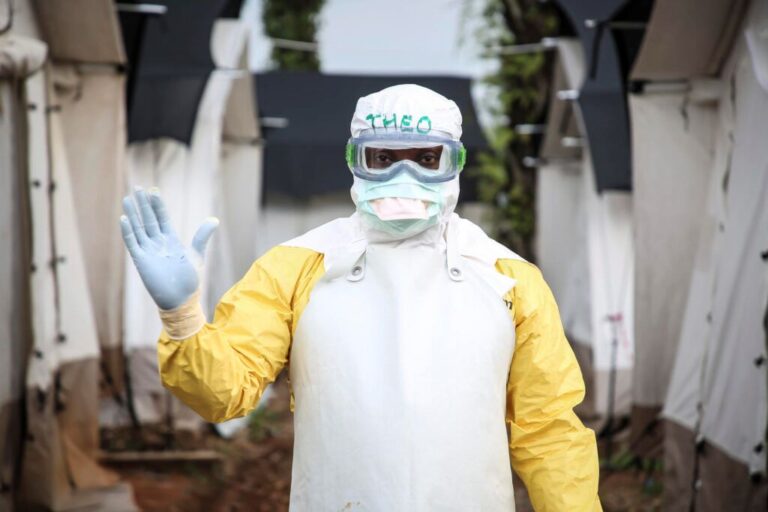
Six months into the latest Ebola outbreak in the Democratic Republic of the Congo (DR Congo), the crisis remains uncontained and continues to inflict a heavy toll on vulnerable populations, prompting the Norwegian Refugee Council (NRC) to warn that purely clinical interventions are insufficient to stop the virus.
Persistent armed violence and recurring attacks across affected provinces continue to drive mass displacement, severely obstructing healthcare delivery while derailing critical contact tracing and patient monitoring efforts. According to the humanitarian agency, unchecked conflict creates an environment where transmission thrives, demonstrating that halting the epidemic requires an inclusive, holistic strategy that places civilian protection and community recovery alongside medical treatment.
To reinforce frontline defenses and keep essential public services functioning, the NRC has rolled out extensive infection prevention and control (IPC) infrastructure across more than 100 schools, 25 health facilities, and 10 local communities. By establishing screening triage systems, installing handwashing stations, supplying hygiene materials, and training staff in strict sanitation protocols, the organization aims to shield students, educators, patients, and medical workers from exposure.
Simultaneously, outreach teams are engaging directly with residents to counter misinformation, build public trust, and encourage swift protective action. An Ebola survivor in Ituri interviewed by the NRC underscored the life-saving value of this grassroots awareness, explaining that recognizing early symptoms and seeking immediate medical care not only ensured his own survival but also protected his family, colleagues, and neighbors from infection.
Beyond physical contagion, the prolonged crisis has generated widespread psychological distress, threatening children’s emotional stability and educational continuity. Through its Better Learning Programme (BLP), the NRC partners with local schools to equip students with coping mechanisms to manage outbreak-related anxiety and stay focused on their studies. Silvia Beccacece, NRC emergency response team leader in Ituri, emphasized that an effective response must extend past viral containment to encompass safeguarding children’s futures and supporting survivors as they reintegrate into society without stigma. As the epidemic evolves, the agency urges national authorities, aid organizations, and international donors to commit sustained political backing, predictable financing, and community-led support to protect both public health and human dignity.
ABJ/APA