





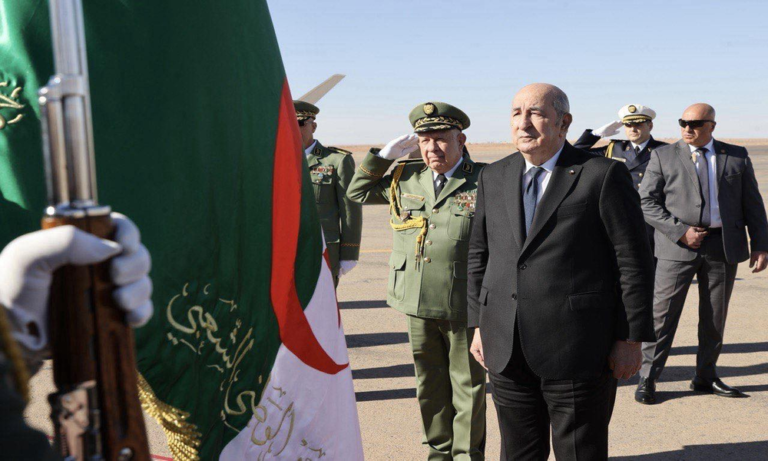
President Abdelmadjid Tebboune launched the “western” mining railway line on Sunday, February 1, 2026, marking a significant milestone in Algeria’s bid to become a global mining power.
The 950-kilometer infrastructure—the longest ever constructed in the Algerian desert—connects the Bechar, Beni-Abbes, and Tindouf regions directly to the massive Gara Djebilet iron ore deposit. During a highly publicized ceremony, the President hailed the project’s completion in under 24 months as a “triumph” of national capability and technical expertise.
The project features impressive engineering feats, including 45 railway bridges totaling nearly 20 kilometers and a massive 4-kilometer structure spanning the Daoura River. While the official narrative celebrates this logistical achievement, critical questions remain regarding the project’s long-term financial sustainability and the transparency of its budgetary decisions. The primary function of the line is to transport raw ore to the Oran-based subsidiary of the Turkish industrial group Tosyali, highlighting a strategic paradox: a project framed as a pillar of national sovereignty remains heavily dependent on foreign industrial partners to process the raw materials and capture added value.
Government officials anticipate a rapid increase in production volumes from the deposit over the coming years to meet ambitious official targets. However, specific details regarding port capacities, long-term commercial buyers, and the actual creation of skilled local jobs have yet to be fully detailed. As it stands, the Gara Djebilet railway serves as both a physical achievement and a powerful political symbol, though its ultimate economic viability will depend on how Algeria manages its technological dependencies and industrial governance in the years ahead.
MK/Sf/fss/abj/APA