





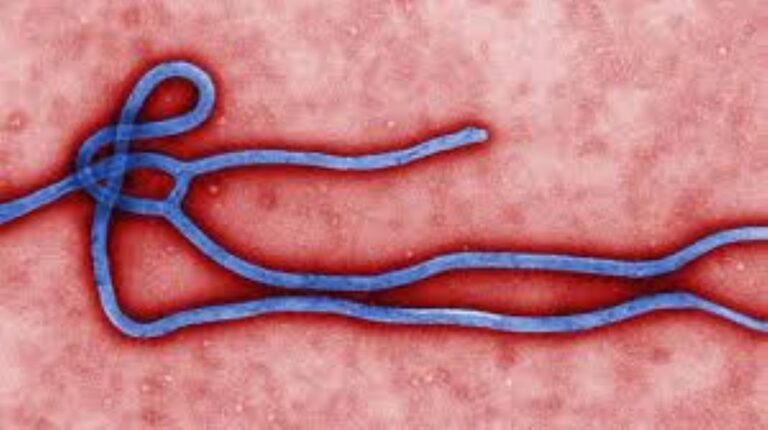
The World Health Organization (WHO) has warned the ongoing Ebola outbreak in the Democratic Republic of the Congo (DRC) could spread to the Central African Republic (CAR).
Briefing African health officials on the margins of the 76th session of the WHO Regional Committee for Africa on Wednesday in Addis Ababa, Marie-Roseline Belizaire, director of emergency preparedness and response at the WHO Africa regional office, stressed that border mobility across the DRC’s 58 Ebola affected health zones heightens the outbreak’s spillover risk across the region.
Highlighting the affected health zones’ proximity to neighbouring countries and the interconnected nature of cross-border trade and mining routes between the DRC and its neighboring countries, she urged countries to urgently enhance their cross-border preparedness and readiness capacities.
“When people move, the virus moves with them,” she said. “This outbreak cannot be treated as a purely national event. Every corridor is a potential export pathway. Managing transmission, therefore, means managing movements, screening at point of entry, and coordinating across borders.”
She noted that the WHO spillover risk assessment has shifted over the past two months, highlighting that the risk has now moved to DRC’s northwest region.
While Uganda previously topped the risk ranking in May, the CAR is now designated as the most at risk country, followed closely by South Sudan as transmission approaches adjacent national borders, according to Belizaire.
As the outbreak rapidly expands in the DRC, the country has recorded 5,656 confirmed Bundibugyo Ebola cases and 2,715 deaths in 58 health zones across six provinces: Ituri, North Kivu, South Kivu, Haut-Uele, Bas-Uele, and Tshopo, it was noted.
Advising regional health authorities to bolster preparedness measures, she urged member states to take immediate precautionary measures based on vulnerability rather than current infection numbers.
To bolster regional readiness, she said the WHO is currently supporting high-risk countries to complete readiness assessments and contingency plans.
She said health officials have conducted 20 simulation exercises, engaging 15 countries to identify weak points in coordination, isolation, and sample transportation before cases arrive.
MG/as/APA