





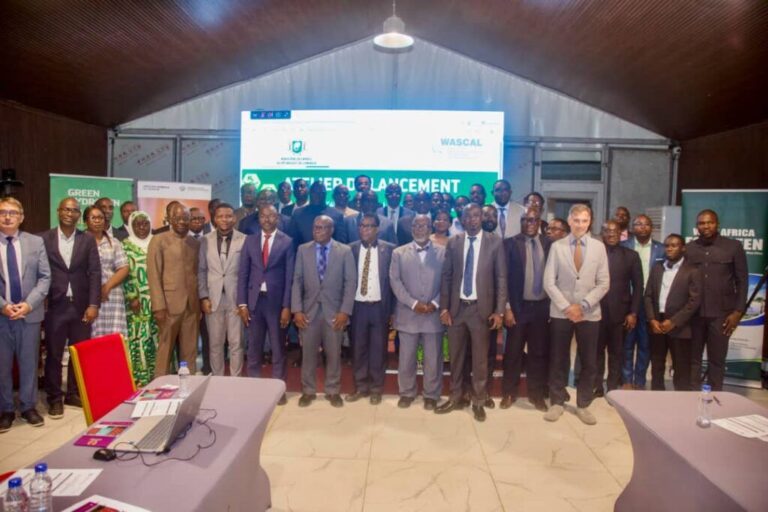
The Ivorian Ministry of Mines, Petroleum, and Energy Thursday launched the process of developing a national green hydrogen strategy.
This major initiative aims to establish a legal and technical framework for this emerging sector while maximizing Côte d’Ivoire’s significant energy potential.
Supported by the West African organization WASCAL and the German federal government, this large-scale project brings together key stakeholders from the energy sector, higher education, and scientific research, alongside strategic partners.
At the opening of the workshops, Jacob Akoussi – Technical Advisor and representative of the Minister of Mines, Petroleum, and Energy – highlighted the country’s need to adapt to global shifts in the energy landscape.
Green hydrogen has emerged as a vital solution for sustainably supporting the national economy.
“Our ambition is to have a strategy that informs decision-making and provides clear direction for both public policy and private investment,” Mr. Jacob stated.
A compass for public and private investment
He noted that this roadmap aligns strictly with the guidelines of the 2026-2030 National Development Plan (NDP) and upholds Côte d’Ivoire’s international climate commitments.
To ensure the sector’s viability, the future strategy must assess priority applications, plan necessary investments, and closely analyse access to competitive renewable electricity as well as the sustainable management of water resources.
Jacob Akoussi called for strong, collective input from the private sector and government agencies to craft a final document that is shared and actionable for all. The success of this transition also
hinges on anticipating academic and technical requirements.
For his part, Arona Diedhiou, a technical advisor representing the Minister of Higher Education and Scientific Research, emphasized that this initiative would effectively prepare the Ivorian training system.
“It is our responsibility to ensure that our higher education and research system is capable of supporting our country’s ambitions,” stated Mr. Diedhiou.
The goal is to equip young people with the skills of the future and to align scientific research with the realities on the ground in Côte d’Ivoire, thereby building a strong bridge between science and public policy.
Strong international and regional support
The collaborative nature of this project was highly praised by international partners. Kone Daouda, representing the Executive Secretary of WASCAL, reaffirmed the institution’s commitment to
maintaining ongoing scientific cooperation with Côte d’Ivoire.
According to him, the strategy’s success will depend on the ability to link science, public policy decisions, and the financial sector.
Kerstin Annassi, representing the German Federal Ministry of Research, Technology, and Space, highlighted Côte d’Ivoire’s exceptional potential.
She stressed the crucial importance of integrating local expertise at every stage of the process to ensure that this new strategy addresses the needs of the Ivorian population in a concrete and effective manner.
AP/Sf/fss/as/APA