





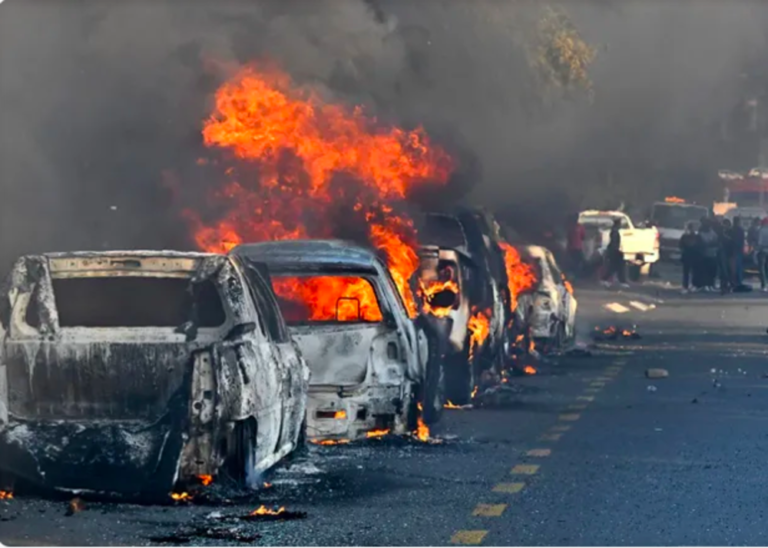
Police and army units were deployed in Durban and Soweto on Friday after anti-immigration protests turned violent, leaving at least 24 vehicles torched and foreign-owned businesses targeted in unrest linked to growing tensions over South Africa’s asylum-seeker policy.
A heavy security presence was visible in both cities as authorities sought to prevent further violence following clashes on Thursday between South African protesters and foreign nationals.
In Durban’s central business district, more than 100 demonstrators carrying sticks marched on Friday while police closely monitored the procession.
Public Order Police, Durban Metro Police and other law enforcement agencies were deployed across the city centre where several businesses owned by foreign nationals remained closed.
The unrest left a trail of destruction in Durban where 14 burnt-out vehicles remained on streets on Friday.
A lodge and warehouse were partially damaged by fire while firefighters returned to extinguish a blaze that reignited in a shop allegedly targeted during the protests.
In Soweto, police and South African National Defence Force (SANDF) vehicles were stationed around the Department of Home Affairs office in Orlando East.
Hundreds of people queued outside the facility as security forces monitored the situation.
Police said nine vehicles were torched near the Home Affairs office in Soweto on Thursday while reports of gunfire during confrontations between residents and foreign shopkeepers were under investigation.
Some foreign-owned shops were also looted.
Acting national police chief Puleng Dimpane condemned the violence and warned that those responsible would face prosecution.
“We will not allow violence, the torching of vehicles, destruction of property or attacks on people to continue,” Dimpane said, adding that police were pursuing those responsible for the attacks and damage.
The latest unrest comes amid growing opposition from anti-immigration groups to the Department of Home Affairs’ implementation of a Constitutional Court ruling delivered in July.
The court ordered the government to remove administrative barriers that had prevented certain migrants and undocumented foreign nationals from applying for asylum, effectively expanding access to the asylum system regardless of how applicants entered the country.
The ruling has reignited longstanding tensions over immigration in South Africa, which hosts one of the continent’s largest migrant populations and has experienced repeated outbreaks of xenophobic violence over the past two decades.
Protesters in both Durban and Soweto have accused authorities of failing to control illegal immigration and have directed their anger at Home Affairs offices processing asylum applications.
JN/APA