





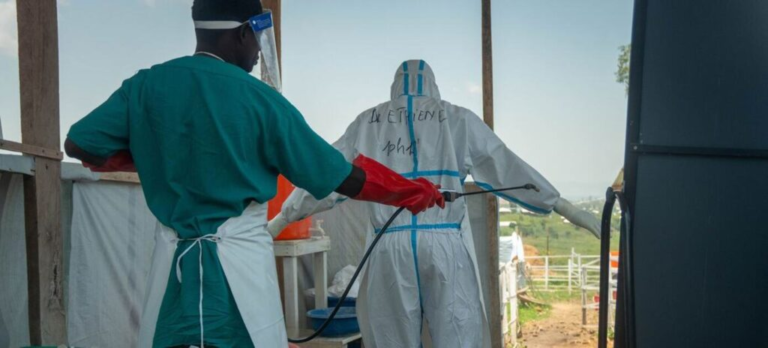
The World Health Organization and United Nations agencies have cautioned that it remains premature to declare a peak in the Democratic Republic of the Congo’s ongoing Ebola epidemic, despite early signs of slowing transmission in select regions.
Official WHO data reported as of September 12, 2026, indicates that the outbreak has amassed 7,200 total cases and 3,475 deaths across seven provinces and 62 health zones, illustrating the vast scale of the health crisis. While provinces like South Kivu have reported no new confirmed cases since late May and Ituri province shows preliminary stabilization, health officials stress that national trends mask severe localized surges across high-risk corridors.
North Kivu remains the primary epicenter of concern, with health authorities observing exponential transmission growth along the key urban transport axis connecting Butembo, Katwa, and Beni. Weekly case counts in North Kivu have doubled over the past fortnight, accounting for 1,269 total confirmed cases and over 500 new infections in the last three weeks alone. Sustained local transmission also persists in Haut-Uélé, while sporadic imported cases in Tshopo and South Ubangi highlight the constant risk of geographic spread driven by population mobility. UN Special Coordinator for Ebola Julien Harneis and WHO epidemiologist Olivier Le Polain emphasized that containment pressure must be sustained, noting that critical indicators—such as community death rates and test positivity—have not yet normalized, leaving the region highly vulnerable to rapid resurgence without expanded international resources.
TE/lb/abj/APA