





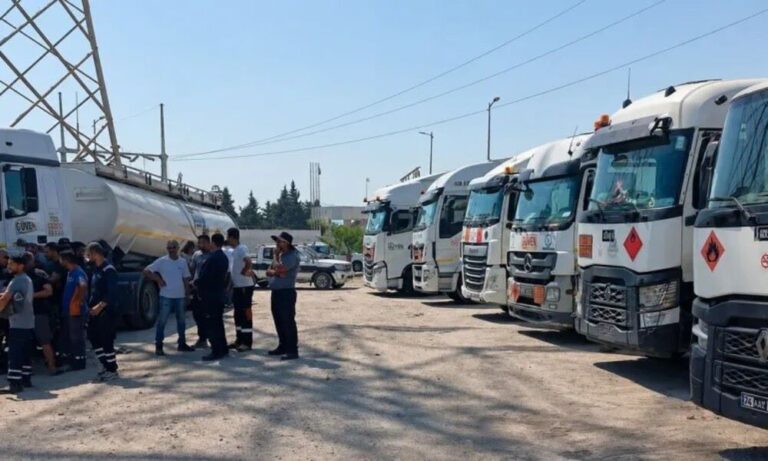
An unannounced strike by tanker truck drivers has paralyzed the oil zone in the Tunisian city of Radès, highlighting the fragility of Tunisia’s supply chain in the face of labour disputes in the hydrocarbon transport sector.
The drivers stopped work on Thursday, August 20, and set up a blockade at the entrances to the Radès oil zone in Tunisia, preventing vehicles loaded with fuel destined for service stations from leaving.
The strike halted transport operations from the morning onward, with no resumption date or formal framework for negotiations announced.
Radès is a crucial link in the petroleum product distribution chain.
The truck blockade does not necessarily mean an immediate shortage at stations, which have varying stock levels, but a prolonged strike could quickly disrupt deliveries. No precise figures have been released regarding the number of vehicles immobilised, the volumes withheld, or the regions likely to be most affected.
The strikers are demanding improved working conditions and the implementation of sectoral agreements, particularly regarding wage increases. These demands had already been made several times, suggesting that social dialogue mechanisms failed to resolve the dispute before it reached a breaking point.
However, representatives of the transport companies have not publicly detailed all of their demands.
The chosen method, based on a surprise stoppage and the blockade of strategic infrastructure, puts motorists and economic activity at risk of supply disruptions.
It also risks triggering panic buying that could artificially exacerbate tensions at service stations, even before any actual fuel shortages occur.
Authorities and industry operators have not yet announced any alternative arrangements to
ensure deliveries.
ensure deliveries.
No plan for stock allocation, use of alternative carriers, or minimum service has been made public.
This lack of visibility fuels concerns and shows that continuity of supply relies on a logistics chain with few backup solutions.
MK/AK/Sf/fss/as/APA
This lack of visibility fuels concerns and shows that continuity of supply relies on a logistics chain with few backup solutions.
MK/AK/Sf/fss/as/APA